MARYSVILLE – One of the hardest things in life is talking about death.
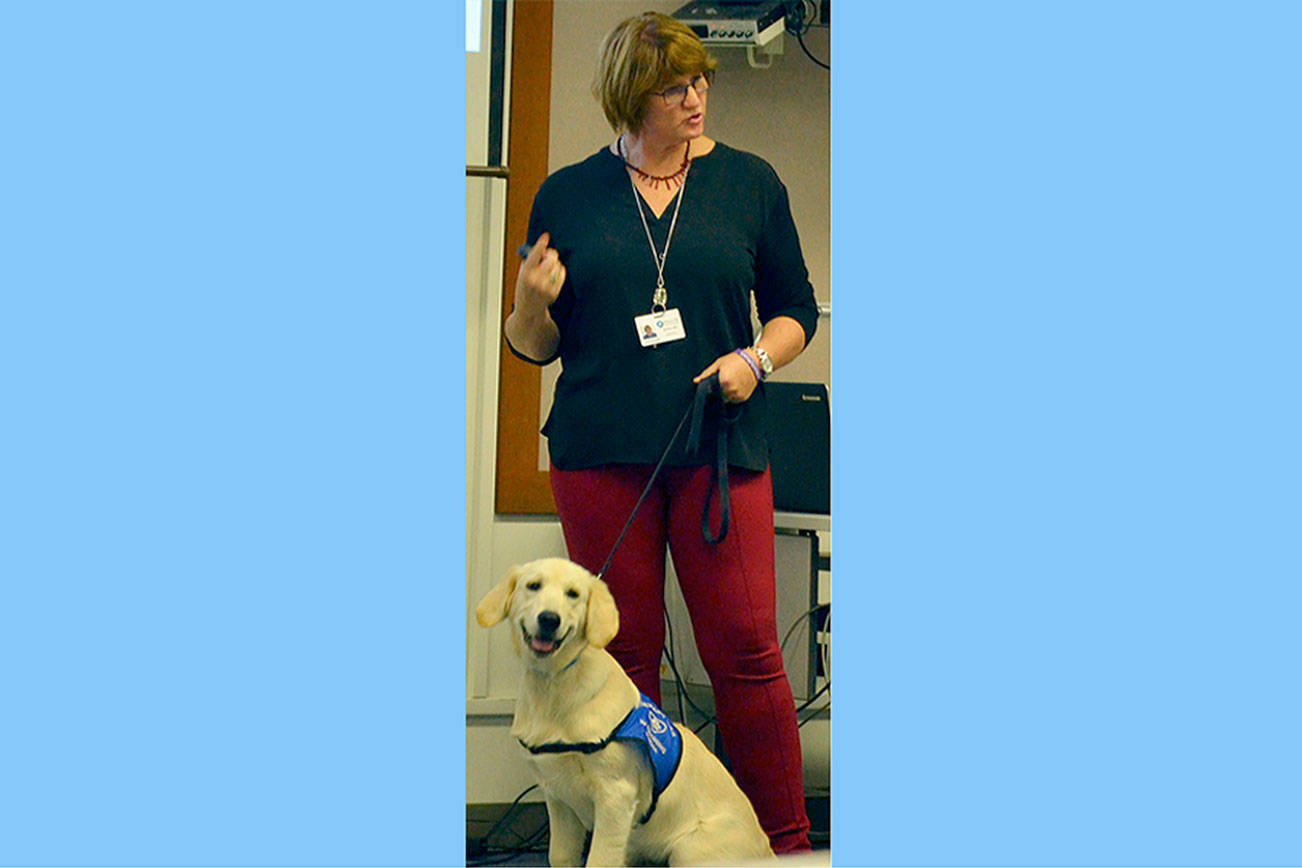
Dana Brothers of Hospice of the Northwest wants to change that.
“It’s a flaw in society that we are given zero education on death,” she said. “Kids are given education on drugs, alcohol, sex, driving … Those four things are variables. They may or may not happen. But guaranteed they will experience death. We’ve got to start the conversation so it’s not such a taboo subject.”
Her goal is to get schools to teach about it when kids are seniors in high school – when they would be best able to handle it.
“Kids experience death,” she said. “If they don’t have any tools to manage it that will only cause more problems.” Brothers said the public has the wrong impression about hospice.
“There’s a misconception that if you go to hospice you’re going to die,” she said.
“It’s the exact opposite. We are all going to die. Our mission is to provide dignity and compassion for every moment of every person’s life.” Since 1989, Hospice of the Northwest has been providing services to people in their homes.
“We bring the care to you,” Brothers said. “We rely on the patient to tell us how they feel and what they want. The patient is the expert. They know what’s best for them. “It’s a different mindset than a doctor telling you what to do.
“What do you want to experience in your life right now at this moment?”
Right away they find out what medicines you’re taking. Brothers said specialist doctors often prescribe different medicines for different reasons that interact in a bad way for the patient. “Too many times pills are not helping but actually hurting,” she said, adding only medications that provide comfort continue. “Many times patients feel better and graduate from hospice.”
How often they come to the house depends on the patients’ needs. Some just need a little bit of support, such as transportation. They are a support team for the primary caregiver.
Others need to be in a hospital or skilled nursing facility and get to go home only as needed. Brother said hospice is there when patients are ready to stop curative treatment, such as chemotherapy or radiation.
“We do not hinder or hasten death,” Brothers said, adding pain management is what they emphasize.
Patients qualify for hospice if they are given a life-limiting terminal diagnosis or a prognosis – or educated guess – of six months or less to live. Almost all insurances have a hospice benefit. For those without insurance there are donations made to a nonprofit foundation.
“We have never refused treatment for a patient for their inability to pay,” Brothers said, adding veterans are 100 percent covered.
Hospice provides social workers, doctors, nurses, caregivers and bereavement counselors, even for the family up to 13 months after a death. Brothers said hospice actually brings patients hope. She said these people have been told that there is nothing more that can be done for them.
“They are hopeless,” she said. “Hospice is that something more we can do for you. It won’t cure you, but it will give you things you may need.” Brothers said people need to start talking about death earlier so that everything they want to happen will happen when they go.
“What’s important to you? We will make sure it happens,” she said.
Written documents help, such as a living will or a 5 wishes health care directive. Not only does it give the patient more comfort, but it also makes it easier on survivors. “It helps the process of grief,” Brother said.
She’s heard too many people say, “I don’t now if that’s what mom wanted. Nothing is documented so the family is left helpless.” Hospice helps the family in many other ways. Just getting patients dressed and transported to a doctor can be exhausting, she said.
“Your family is having a difficult time while you are going through this. Would they benefit from some support? The image of the grim reaper with a morphine injection in his hand is the farthest thing from the truth,” Brothers said.
People who work in hospice are special. It attracts people who have experienced death or hospice and come out feeling enriched, Brothers said.
“They have huge, open hearts. They are natural caregivers who want to give back,” she added.
Brothers said she gets more from the patients than she gives them.
“It is such an honor to have these moments with these people. I feel so blessed. I should be the one paying them,” she said. “We feel good as a species when we do good for others.”
Another service
Hospice of the Northwest provides a unique service for anyone who experiences a loss – not just a death.
That includes someone who has lost a job, is homeless, is involved in a divorce – even if you’ve lost a pet.
“Attachment to animals can be very strong. It can have a profound impact on especially older people,” said Dana Brothers of Hospice of the Northwest.
The service includes connecting grievers to support groups. Whatever the loss, it can be devastating, Brothers said.
“Some can’t get over the grief,” she said. “We try to normalize their feelings, let them understand you’re not crazy.”
She said patients are given the tools and coping mechanisms to “bring them back to a place where they can function well in society.”