ARLINGTON — “It’s been a darn good year for Arlington,” Mayor Barbara Tolbert told the Stillaguamish Valley Pioneers during her annual State of the City address Aug. 16.
Tolbert reported that the city began 2015 with 30 percent of its reserve fund built up, and is set to end the year with 50 percent, which should put Arlington in full compliance by 2018.
“That matters because it restores our bond rating and lowers our interest rates,” Tolbert said.
The city fire department will roll out a new fire engine and ladder truck in October, in addition to the eight police vehicles it had already replaced, she added.
Tolbert then congratulated the community for its response to last year’s Oso slide, which she credited with earning Arlington awards from the American Red Cross.
“The awards were presented to me on behalf of the city, but were really a reflection of the way the community reacted, which makes me feel so blessed to be your mayor,” Tolbert said.
Tolbert reviewed the police department’s reorganization over the past year, including its restoration of a Pro-Act Team, to make it more responsive to drug-related crimes. She likewise cited the role of “community policing” in addressing issues such as homelessness.
“We’ve started the Pooch Patrol,” Tolbert said. “People who walk their dogs daily can serve as extra sets of eyes and ears for the police.”
Since the police department has only 27 officers, the addition of the Pooch Patrol’s 15 members to date help out quite a bit, Tolbert said.
The city also completed its update to its comprehensive plan. Arlington is required to update its comp plan every 10 years, and every one is required to project the city’s expected levels of population, residential and infrastructure growth out 20 years, or to 2035.
“Those estimates will determine the course of our housing, transportation and schools,” Tolbert said.
Tolbert reiterated what city consultant Al Aldrich had shared with her and the City Council last month, which was the relative generosity of the state Legislature in awarding money to projects that will serve Arlington. The $39 million widening of 172nd Street will address one of the city’s most challenging traffic areas, while more than $2 million will go toward expanding the Arlington Boys & Girls Club.
Also expanding is the Arlington Family Resource Center, at the Stillaguamish Senior Center, whose one part-time and two full-time staff members have been working with families before they find themselves homeless, or with their utilities disconnected, by connecting them to agencies that can address their needs.
On the business front, Tolbert explained that the former Thrifty Food Pavilion will soon be home to a dollar store and a Grocery Outlet, but she admitted that she has no idea what might be moving into the former Haggen Food & Pharmacy.
“The owners of the property aren’t communicating with the city,” Tolbert said. “As for the Food Pavilion in Smokey Point, we’ve worked with seven different clients, and negotiations with the last one fell apart four months. I don’t think the owners of the property are being realistic. That can be a problem when the owners don’t live in the city.”
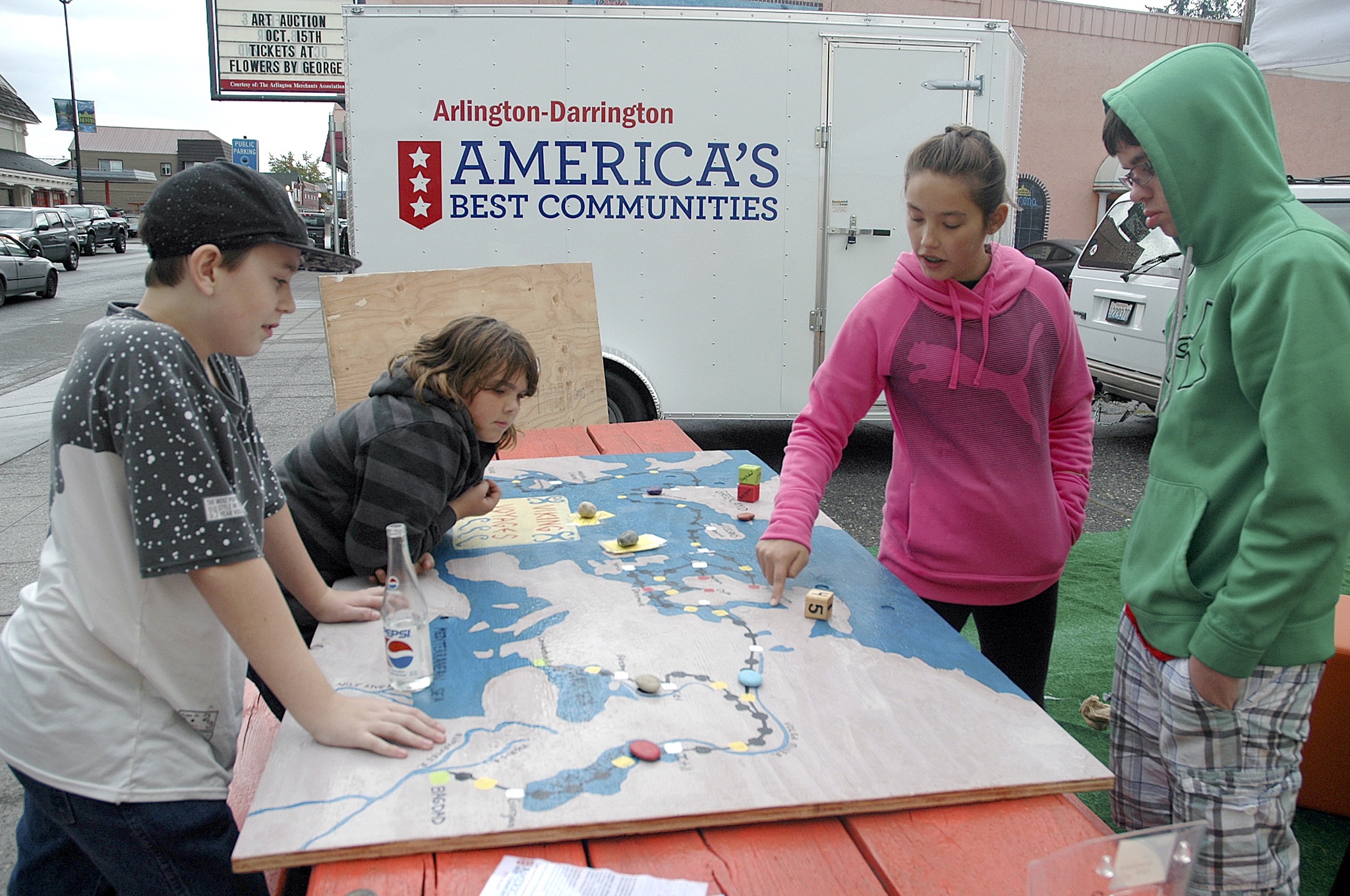
In better news, Arlington and Darrington became one of 50 quarter-finalists, out of the 382 communities that applied for a Frontier Communications contest to expand broadband Internet access. Tolbert explained that their prize for making it into the quarter-finals was $50,000, plus another $15,000 from one of the sponsoring companies, provided the community could match it.
“We not only matched it, we beat it,” said Tolbert, noting that the community raised $16,000 a week before it was due. “What winning this would mean is comprehensive Internet access, all across the valley. It would be too expensive for us to provide on our own, but no one in the modern world can get ahead without it.”
In addition to installing the infrastructure so that visitors to public parks could surf the web on their laptops, the economic development funded by this contest would also include a program to foster more volunteerism and community investment among youth in their high school and college years, as well as providing the education and resources for local businesses to enhance their “curb appeal.”
“We knew that Millennials see themselves as entrepreneurs, so when they start their own businesses, we want them to put down roots here,” Tolbert said. “We also want our businesses and community to look like the best in America, because that’s what they already are.”